Category: Education

  • Demand OLPC

    Non-Universal Learning

    As they roll off the production line demand for the little education laptop is growing. The OLPC project, created by Nicholas Negroponte, to help teach the worlds children is starting to gain real traction. It sure didn’t take long to run through the first production run! The Give 1 Get 1 program appears to have been a big success. The program was extended through the end of 2007. Don’t wait get yours now!

    Over the weekend Peru pushed the demand over the first run ordering 260,000 laptops. We are very happy that the huge potential is being recognized. The stories and pictures of the children around the world receiving their laptops are terrific.

    We like to speculate about the benefits that these computers will bring to a world with such limited resources. How will these tools help to enhance the ability of teachers, provide access to materials and resources that help children learn, and eventually eliminate poverty in our world?

    It is easy to get the wrong idea about what this computer is, just as it is easy to get the wrong idea of the benefit of the internet. There is so much of the internet that is not good for children. The explosion of new social media has many people asking if letting children on the internet at all is even a good idea. It is true that delivering access to basic software and the internet is of little value and could even be considered harmful. If the OLPC project was about delivering laptops there would really be no good reason to support it.

    OLPC is not laptops, it’s software. It’s Squeak and EToys. It’s communications and collaboration. It’s coordination of lesson plans between teachers and with students. This is no regular computer, it’s an education platform geared to enhance the abilities of teachers to teach. To extend the reach of real educators, to provide a common platform so that the worlds brightest minds can reach across the great north-south divide and help teach children that have so little resources. It is a way to share the greatest discoveries of the past with the children of the future. There is no better way to fight violence and poverty than with education.

    Children around the world will benefit from the extraordinary efforts of all the volunteers and participants in this very worthwhile project. Children that may even be in your own back yard. Like maybe Birmingham Alabama in the U.S.A. where the city just ordered 15,000 laptops for every child in grade 1 through 8.

    It appears the questions about success are beginning to fade. The real question is can production keep up with demand. Demand OLPC today. There is no substitute for the little education laptop.

  • Nepal’s Open Learning Exchange Announces First Learning Activity (It’s Squeak!)

    Nepal's Open Learning Exchange Announces First Learning Activity (It's Squeak!) - picture 1

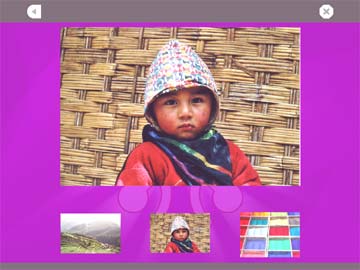
    The world watches as the adults fight over power. Who will run the country of Napal, what will the political solutions bring to the people, what will it mean to the children? I know I’m not the first to recognize the incredible beauty of the country, just look at these beautiful pictures in Nepal’s Open Learning Exchange first learning activity, developed in Squeak to be used in OLPC. We can only hope that the people that win power, during this difficult time, will concentrate on the children, on education, and on happiness and enlightenment for all.

    Nepal's Open Learning Exchange Announces First Learning Activity (It's Squeak!) - picture 2

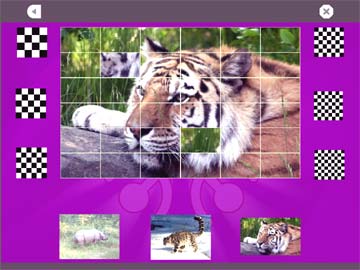
    The Program itself is beautifully done. I found myself learning how to say the numbers. This Tiger was really fun, and kinda difficult to reconstruct.

    This is a very good example of what technology can give to children, and how the local community can participate to help educate their youngest members.

    Read it from the creators:

    “The word in Devanagari script at the top is “E-Paati.” OLE Nepal’s General Secretary created this term. “Karipaati” means blackboard and we use “E-Paati” to refer to any kind of computer, such as a desktop, laptop, or PDA. OLE Nepal’s unofficial slogan right now is “From Karipaati to E-Paati.” We think this slogan expresses that using laptops in schools in simply the next logical step in education. We prefer the E-Paati over “laptop” or “computer” because both are seen as luxuries in Nepal. Karipaatis are not seen as luxuries but essential to education. We hope to convince the Nepali public that in this day in age E-paatis are essential to a quality education. “

    This level of understanding of local conditions can only come from the local people themselves. Developing an education platform and making the tools available throughout the world far surpasses the value of a cheap laptop. This is only one of what will be thousands of projects that will change the planet. The $100 Laptop came first but everything else comes now. The software will easily surpass the value of the computer! As Nicholas Negroponte is fond of saying, “This is an education project, not a laptop project.” We couldn’t agree more, and we are proud that Squeak and EToys are a part of this terrific project. Today is a good day to celebrate E-Paati!

  • Recess!! Learning at play.

    Etoys

    Bill Kerr tells us about a really cool new project from Mark Shuttleworth’s Foundation called Kusasa.

    Check out Bills comments about learning from Play, and please be sure to follow the links on his post, they are very interesting.

  • Pretty Cool NYTimes OLPC Review

    OLPC Interface

    David Pogue at NYTimes reviews the One Laptop Per Child computer.  Don’t miss the video clip, it’s very cool.

  • Don’t Miss Cincom’s Seaside Podcasts Next Week

    Seaside Sign Small

    From Michael Lucas-Smith:

    Hi Everyone,

    Just a heads up that Industry Misinterpretations, our Smalltalk podcast, has three podcasts specifically about Seaside coming out over the next week.

    Podcast #1: Myself, James Robertson, Tamara Kogan, Martin Kobetic, Arden Thomas

    Podcast #2: Myself, James Robertson, Michel Bany, Alan Knight, Arden Thomas

    Podcast #3: Myself, James Robertson, The entire Gemstone GLASS team

    The podcasts will be appearing here:
    http://www.cincomsmalltalk.com/userblogs/cincom/blogView?content=podcasts
    You can subscribe to the podcast in iTunes (just search for smalltalk) or with: http://www.cincomsmalltalk.com/rssBlog/blog_podcast.xml
    They’ll also be announced on James’s blog:
    http://www.cincomsmalltalk.com/blog/blogView

    Cheers,
    Michael

  • New Seaside Paper

    Seaside Article
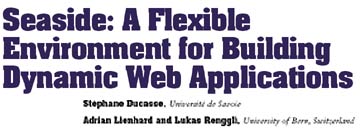
    See IEEE Software
    September/October: Dynamically Typed Languages

    For a very nice article about Seaside.

  • Coming Soon – Open Source Squeak Book!

    Last week at ESUG, co-author Stéphane Ducasse announced a new book will be available in mid-September entitled “Squeak By Example“. First released as a beta version, and totally free and open-source, you can find out more at the book’s website.

  • OLPC on TV

    OLPC Size

    From: Michael Haupt,

    The German/Swiss/Austrian TV station 3sat has a weekly 30-minute show called “neues” (roughly translated “new things”) which deals with IT-related information. Yesterday’s show was focusing on bringing IT to isolated regions and emerging nations as well as developing countries. The show featured an article on mesh networks in Ecuador and the Linux4Africa project.

    Linux4Africa is a German project collecting old but functional hardware. The components are cleaned, repaired (if necessary), bestowed with an Edubuntu Linux installation, and sent to Tanzania and Moçambique.

    12 of the show’s 30 minutes were dedicated to an extensive coverage of the OLPC project. Etoys and Squeak were mentioned several times during the feature. The project itself was introduced, and Bert Freudenberg was interviewed about the technical features of the XO laptop, which was presented in detail.

    There were also two interviews in the studio. Two members of GTZ (Deutsche Gesellschaft für Technische Zusammenarbeit; German Society for Technical Cooperation) responsible for XO distribution in Ethiopia talked about the project in general and about the impressive progress children made when working with the XO.

    The other interview – which filled the first slot in the OLPC coverage – featured two students from Hasso Plattner Institute, Potsdam, who have developed strategic and skill-improving games for the XO in the Software Architecture Group‘s course on software architectures.

    All in all, the editorial staff at 3sat did a tremendous job in preparing this show. To the writer’s knowledge, this was the first time the OLPC project was presented at such a level of detail in German television. Germany being a country where the the project has no actual lobby, it is important to have such media coverage – it would be nice to see much, much more of it.

    The entire show can be watched online (in German).

  • Dynamic Language Symposium

    Dynamic Languages 2

    Call For Papers!

    Are you ready to OOPSLA!!

    The Dynamic Language Symposium is looking for participants.

    D L S 2 0 0 7

    Dynamic Languages Symposium

    October 22, 2007
    Palais des congres de Montreal
    Montreal, Canada

    co-located with OOPSLA 2007
    sponsored by ACM SIGPLAN

    http://www.swa.hpi.uni-potsdam.de/dls07/

    The Dynamic Languages Symposium (DLS) is a forum for discussion of dynamic languages, their implementation and application. While mature dynamic languages including Smalltalk, Lisp, Scheme, Self, and Prolog continue to grow and inspire new converts, a new generation of dynamic scripting languages such as Python, Ruby, PHP, and JavaScript are successful in a wide range of applications. DLS provides a place for researchers and practitioners to come together and share their knowledge, experience, and ideas for future research and development.

    This year 30 papers were submitted to the Dynamic Languages Symposium of which 9 papers were accepted. The program committee reviewed each paper and met electronically to select papers for the final program.

    We are pleased host invited talks by Mark Miller and Jim Hugunin.

    The program of the Dynamic Languages Symposium is available from http://www.swa.hpi.uni-potsdam.de/dls07/

    Please note that participation in DLS requires registration with OOPSLA at http://www.regmaster.com/conf/oopsla2007.html or http://www.oopsla.org/oopsla2007/

    Contact:
    Pascal Costanza (pascal.costanza @ vub.ac.be)

    Robert Hirschfeld (hirschfeld @ hpi.uni-potsdam.de)