Author: Ron Teitelbaum

  • Tunnel Vision? OLPC

    Tunnel Vision OLPC

    EDITORIAL By Ron Teitelbaum.

    You get what you pay for. The world is much better for all the corporate contributions to end poverty and the huge commitment over the years to help educate the worlds children. There is no question that the world owes a huge debt to these companies. Now that corporations have made such great strides throughout the world they should be paid handsomely for their computers and software. After all, corporate resources can never be matched by a Non-Profit.

    (more…)

  • Intel Resigns From Board Of One Laptop Per Child

    Intel Resigns From Board Of One Laptop Per Child
    By STEVE STECKLOW
    of The Wall Street Journal

    (reproduced with permission)
    January 3, 2008 8:17 p.m.

    OLPC

    Intel Corp. says it has dropped out of a non-profit project to sell millions of low-cost laptops in the developing world, citing disagreements with the organization’s founder, Nicholas Negroponte.

    The divorce culminates a stormy relationship between the Santa Clara, Calif.-based chipmaker and the One Laptop Per Child project, which recently began selling a low-cost laptop in African, Latin American and other countries. The two sides had been feuding over Intel’s aggressive marketing of a low-cost laptop of its own design in many of the same countries that the non-profit had been targeting. The OLPC machine uses a microprocessor from Intel’s chief competitor, Advanced Micro Devices Inc.

    After more than a year of public sniping between Intel and OLPC, Intel joined OLPC’s board in July and had been planning on announcing a new low-cost, OLPC-designed laptop based on an Intel microprocessor at next week’s Consumer Electronics Show in Las Vegas. But the company has quit the board and scrapped the new machine, according to Intel spokesman Chuck Mulloy.

    “We’ve reached a philosophical impasse with OLPC,” he said. He added that Mr. Negroponte had demanded that Intel stop selling its own designed laptop, known as the Classmate, and to stop supplying its chips in other laptops marketed to schoolchildren in developing countries. “We can’t accommodate that request,” Mr. Mulloy said. He said Intel favors offering “many solutions” to developing countries, not just the OLPC laptop. He also said dropping the Classmate would hurt Intel’s relationships with overseas manufacturers and suppliers.
    Tens of thousands of Classmates have been sold.

    Mr. Negroponte, a professor on leave from the Massachusetts Institute of Technology, couldn’t be reached for comment. The simmering dispute between Intel and Mr. Negroponte was detailed in a page-one story in this newspaper in November.

    The concept of a low-cost laptop for the world’s poorest schoolchildren has sparked great interest from world leaders and technology companies ever since Mr. Negroponte first proposed it three years ago as a way to bridge the technology divide between rich and poor countries. He vowed to get such a device, costing just $100, into the hands of up to 150 million children by this year. But although OLPC has managed to develop an innovative machine, it has failed so far to achieve its target price — the current model sells overseas for $188 — and to attract large orders from governments because of increasing competition. As sales problems mounted, the project recently reversed course on its plan not to sell the device to American consumers. In November, it began selling pairs of laptops to U.S. and Canadian consumers for $399 under a program in which buyers could keep one and give the other to a student in a poor country like Haiti. The program ended on Monday. OLPC has called the program — known as “Give One. Get One.” — successful, but hasn’t disclosed total sales figures.

    Mr. Negroponte serves on a committee to protect the editorial integrity of Dow Jones & Co., the owner of The Wall Street Journal that was acquired last month by News Corp.


  • Immersive Education the focus of 2008 Boston Summit (January 12-13 at Boston College)

    Boston Digital Media Summit

    From Aaron E. Walsh:

    Happy New Year, everyone. As we enter 2008 I’m happy to announce that the Boston Digital Media Summit (next weekend) is focused on Immersive Education and will feature Croquet in several sessions (see the schedule of events below; Julian’s keynote is on Day 1 — January 12th).

    Please join us if you’re in the Boston area or would like to make a trip for the event. The news release is below, and I’ve attached the PDF version as well.
    It’s also in HTML format along with related news items at:

    http://ImmersiveEducation.org/#NEWS

    The Summit schedule of events has been set, which you can also see at:

    http://mediagrid.org/summit/ (main page)
    http://mediagrid.org/summit/program.html (schedule of events)

    Best regards,
    Aaron

    (more…)

  • Old Smalltalk Pics From PARC

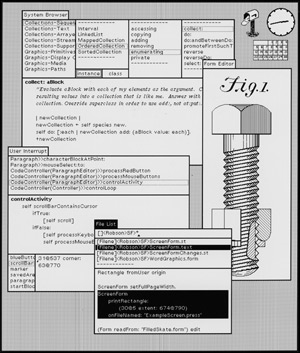
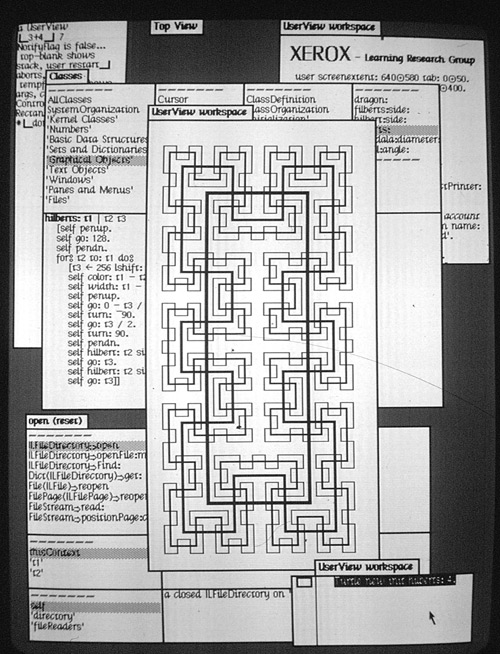
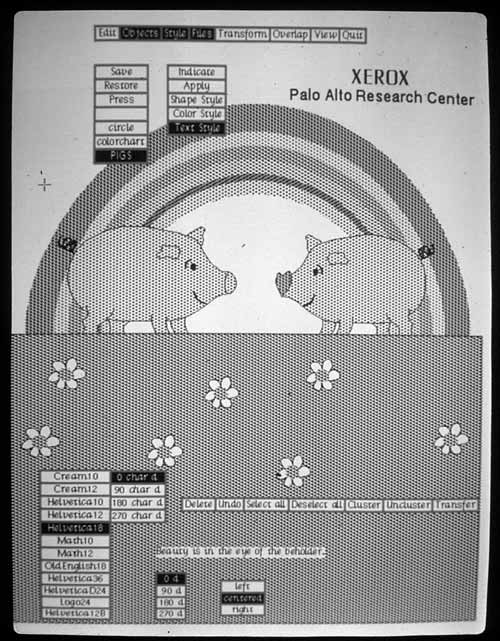
    PARC Browser smallPARC Hardware smallPARC Hilberts smallPARC kids smallPARC Mazewar smallPARC Patterns smallPARC Welcome small

    Special Thanks to Craig Latta who recently brought back these pictures of 1979 Smalltalk\Alto from PARC. What fun it is to see these pictures. The originals in terrific high resolution can be downloaded from here.

  • Here it is. OLPC!!

    Ron-Zoe from olpc

    Now I know this computer is supposed to be for children, and I’ve really enjoyed seeing all the wonderful pictures of the children receiving their computers, but as an adult I really did not expect it to be this much fun.

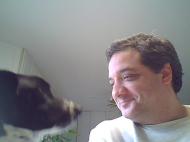
    I’m writing you from my olpc computer. I just received it from the Give 1 Get 1 program. I took this snapshot from the computer. Zoe was quite interested too and couldn’t resist getting in the picture.

    I had no trouble getting on-line and figuring out the interface. I was quickly zooming around making music, guessing random numbers, finding matching tiles, and reading programs.  There are a lot of fun, interesting and educational activities to do.  I got to turtle art and had a blast creating my own turtle spirograph. I made the little turtle walk using the programming tiles in a repeating path, then turned it by 80 degrees and set up a repeat.  I was able to draw some very cool shapes.

    What fun !! It is not too late, but time is running out fast. Give an Olpc XO computer to a needy child and get one that you can play with too! Now I guess maybe I’ll show it too wife and daughter. If I have too.

  • The First Smalltalk Conference In Argentina

    Argentina Smalltalk 2007

    From Hernan Wilkinson:

    Hi,

    I just wanted to let you know that the Smalltalks 2007 presentations are available at https://www.dc.uba.ar/events/smalltalks/2007/presentaciones
    Most of them are in English although not all.
    You can look some pictures at http://picasaweb.google.com/smalltalks2007 and http://picasaweb.google.com/WeybridgeWay/1erCongresoArgentinoDeSmalltalk

    I wanted to give a public “Thanks” to ESUG for their support (DVD, book, ideas, etc), Viewpoints, Dan Ingalls, James Robertson, John Sarkela and Bruce Badger for the videos. Stef and Noury sent me something to read but finally I did not have the time to do it (sorry). Also, to all the sponsors that helped us with the conference.

    Below are some comments we got in the Argentine Smalltalk lists (first in Spanish and then in English, translated by Andres Valloud).
    It is very hard for me to find the right words to express how happy we are with the outcome of the conference, not only for the amount of people that came but also for their kindness and technical level of the presentations. Thanks to all.

    Hernan
    (more…)

  • Virtual Education a Reality for Aaron E. Walsh

    Aaron Walsh

    The Federation of American Scientists and the Kauffman Foundation are backing the Boston College’s own Aaron E. Walsh efforts to build virtual reality education content for virtual worlds like Croquet, Second Life and Project Wonderland.

    Walsh has been focusing on delivering content to children with disabilities through the Grid Institute an organization that promotes the use of a public utility grid to develop and deliver high-end virtual reality and 3-D simulation programs.

    This new multi-million dollar project called Immersive Education promises to bring together an international group of educators, researchers and companies along with foundations to develop standards and technologies that will enable a much richer interactive 3-D educational experience.

    The award winning Immersive Education software, now on it’s third generation was originally only available for university students. The project was started in 2004 at Boston College. The software is now available as an open standard for educational software. Visit immersiveeducation.org for more information.

  • Demand OLPC

    Non-Universal Learning

    As they roll off the production line demand for the little education laptop is growing. The OLPC project, created by Nicholas Negroponte, to help teach the worlds children is starting to gain real traction. It sure didn’t take long to run through the first production run! The Give 1 Get 1 program appears to have been a big success. The program was extended through the end of 2007. Don’t wait get yours now!

    Over the weekend Peru pushed the demand over the first run ordering 260,000 laptops. We are very happy that the huge potential is being recognized. The stories and pictures of the children around the world receiving their laptops are terrific.

    We like to speculate about the benefits that these computers will bring to a world with such limited resources. How will these tools help to enhance the ability of teachers, provide access to materials and resources that help children learn, and eventually eliminate poverty in our world?

    It is easy to get the wrong idea about what this computer is, just as it is easy to get the wrong idea of the benefit of the internet. There is so much of the internet that is not good for children. The explosion of new social media has many people asking if letting children on the internet at all is even a good idea. It is true that delivering access to basic software and the internet is of little value and could even be considered harmful. If the OLPC project was about delivering laptops there would really be no good reason to support it.

    OLPC is not laptops, it’s software. It’s Squeak and EToys. It’s communications and collaboration. It’s coordination of lesson plans between teachers and with students. This is no regular computer, it’s an education platform geared to enhance the abilities of teachers to teach. To extend the reach of real educators, to provide a common platform so that the worlds brightest minds can reach across the great north-south divide and help teach children that have so little resources. It is a way to share the greatest discoveries of the past with the children of the future. There is no better way to fight violence and poverty than with education.

    Children around the world will benefit from the extraordinary efforts of all the volunteers and participants in this very worthwhile project. Children that may even be in your own back yard. Like maybe Birmingham Alabama in the U.S.A. where the city just ordered 15,000 laptops for every child in grade 1 through 8.

    It appears the questions about success are beginning to fade. The real question is can production keep up with demand. Demand OLPC today. There is no substitute for the little education laptop.

  • Qwaq Secures $7 Million in Funding From Alloy Ventures and Storm Ventures

    Qwaq_Intel_Screeshot

    Full speed ahead. With the rise of virtual technology and a huge lead in the virtual workspace market, Qwaq pulls even further ahead with a successful first round funding raising $7 Million from Alloy Ventures and Storm Ventures.

    Qwaq Forums the company’s first commercial product is built on Croquet and open source virtual world development platform written in Squeak, an open source version of Smalltalk. The work that Qwaq has put into forums is exceptional. The platform takes the concept of a virtual world with all the benefits of immediate communications and immersive visual feed back and integrates it with important business technologies that allow users to truly collaborate in real time. They have taken Croquet and made it work for business.

    The news is really terrific, not only for Qwaq and their customers, but for our open source communities as well. Qwaq continues to share code and support both Croquet and Squeak, not to mention hiring some of the best and brightest Smalltalkers, something I’m sure Qwaq will continue to do with this new funding.

    Congratulations Qwaq!!