Author: Ron Teitelbaum

  • Seaside – One Click Experience!

    Seaside - One Click Experience!

    Philippe Marschall announced the Seaside – One Click Experience!

    There has been a lot of talk recently about improving the Smalltalk, Squeak and Seaside experience for new users. Especially to make it easier and faster to get started. The two vendors that support Seaside are working in this area. That does not mean Squeak can not lead the way. Today we present you the Seaside One-Click Experience [1] for OS X, Windows and Linux based on the work done by the Sophie Project [2].

    Just download the zip-archive, extract it and double click on the executable for your platform and you have Seaside 2.8 final running.

    Cheers
    The Squeak Seaside Team

    [1] http://www.seaside.st/download/squeak#167943699
    [2] http://www.sophieproject.org/

  • Who you gonna Call? – The Net Neutrality Squad!

    NetNeutrality

    Net Neutrality is not just about money. It’s not just about power. It’s not about just about limiting what you can view. Or censoring your voice and freedom. IT’S ABOUT ALL THOSE THINGS!!

    Are you ready to have FOX news streaming to your computer with lightning speeds and MSNBC unable to connect? Do you want to see a world where to get Google search you have to pay a premium fee to your ISP? Do you think it is ok to have to pay every ISP to carry the traffic from your website? “No, I’m sorry you can’t see my web site from there, I didn’t pay AT&T, so they censor my website from their customers! Oh you are not an AT&T subscriber, well they must support the traffic in your area with their cables, I’m sorry.”

    Does anyone really think this is a good idea?? It’s no wonder Google is looking for way to get off the wire! The internet is a public utility, and it needs to be protected from schemes that will do nothing but squash your freedoms, create huge monopolies, and destroy our new electronic economy. Somebody should do something about this!!

    Check out NNSquad! NNSquad was started by PFIR but look who else showed up! Bruce Schneier and David Reed! I couldn’t be happier to see these two names on the list.

    Bruce is a cryptography hero, he speaks about common sense in security. He is not afraid to take a controversial stance and speak truth to power. If you have not signed up for his news letter, consider it, it is very interesting reading.

    Of course everyone here knows who David Reed is. David is one of the principal architects of Croquet. He is also very well known for his work on Social Networks. If anyone knows about the Internet and it’s implications it is Daivd.

    It’s exciting to see some movement around this issue. It is definitely time to make some noise before we all wake up and the world as we know it today has already been bought and sold. Get involved, say informed, support NNSquad!

  • OLPC Moves into Mass Production

    https://i0.wp.com/wiki.laptop.org/images/e/eb/StartOfMP.jpg

    And they are off! Mass production of the One Laptop Per Child XO computer has started. The last of the major problems in production appear to have been chased out of the assembly line. Some minor problems with tooling that was causing some small blemishes on the bumpers have been tweaked. Everything is ready to roll.

    The last major technical issues have been addressed with new tests developed to run on the production line itself. This high level of testing is necessary because of the harsh environments that this laptop will be used.

    OLPC is an extremely low power very durable computer which is being developed to improve access to learning materials for the worlds children. This education project continues to amaze the world with the level of commitment to provide opportunities for all. Reaching Mass Production is no small task. Congratulations to all!

  • Take cover we are being INVADED!!

    Invaders

    Bill Kerr is learning by playing. He is building Space invaders in EToys. This should be fun to watch! Great icons!!

  • Nepal’s Open Learning Exchange Announces First Learning Activity (It’s Squeak!)

    Nepal's Open Learning Exchange Announces First Learning Activity (It's Squeak!) - picture 1

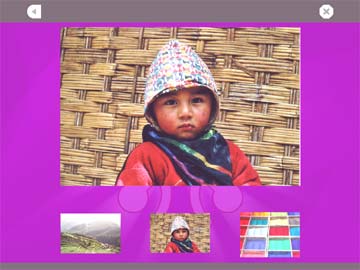
    The world watches as the adults fight over power. Who will run the country of Napal, what will the political solutions bring to the people, what will it mean to the children? I know I’m not the first to recognize the incredible beauty of the country, just look at these beautiful pictures in Nepal’s Open Learning Exchange first learning activity, developed in Squeak to be used in OLPC. We can only hope that the people that win power, during this difficult time, will concentrate on the children, on education, and on happiness and enlightenment for all.

    Nepal's Open Learning Exchange Announces First Learning Activity (It's Squeak!) - picture 2

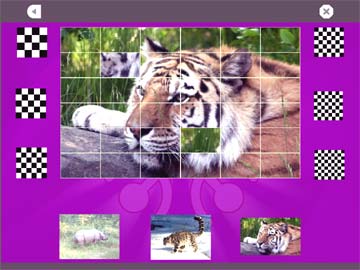
    The Program itself is beautifully done. I found myself learning how to say the numbers. This Tiger was really fun, and kinda difficult to reconstruct.

    This is a very good example of what technology can give to children, and how the local community can participate to help educate their youngest members.

    Read it from the creators:

    “The word in Devanagari script at the top is “E-Paati.” OLE Nepal’s General Secretary created this term. “Karipaati” means blackboard and we use “E-Paati” to refer to any kind of computer, such as a desktop, laptop, or PDA. OLE Nepal’s unofficial slogan right now is “From Karipaati to E-Paati.” We think this slogan expresses that using laptops in schools in simply the next logical step in education. We prefer the E-Paati over “laptop” or “computer” because both are seen as luxuries in Nepal. Karipaatis are not seen as luxuries but essential to education. We hope to convince the Nepali public that in this day in age E-paatis are essential to a quality education. “

    This level of understanding of local conditions can only come from the local people themselves. Developing an education platform and making the tools available throughout the world far surpasses the value of a cheap laptop. This is only one of what will be thousands of projects that will change the planet. The $100 Laptop came first but everything else comes now. The software will easily surpass the value of the computer! As Nicholas Negroponte is fond of saying, “This is an education project, not a laptop project.” We couldn’t agree more, and we are proud that Squeak and EToys are a part of this terrific project. Today is a good day to celebrate E-Paati!

  • Seaside 2.8 Released!!

    Seaside 2.8 nb

    After a beta phase of two months we release the final version of Seaside 2.8. Most bugs fixed during this period were either long standing (already in 2.7), minor or portability related, Together with the dozens of Seaside 2.8 applications already in production today this gives a pretty good feeling about this version. A special mention goes to Roger Whitney, thanks to him we went from 99 commented classes to 144.

    This release brings major performance and memory improvements:

    • The rendering speed of an average page is up to twice as fast as with previous versions, because of the new character encoding architecture.
    • An average application requires up to four times less memory than with previous versions. The reason for this is the optimized object backtracking and the reduction of stored continuations.

    We have a list of new features [1] and a migration guide [2] on our homepage.

    Squeak users can get it either from SqueakMap, Universes or directly via Monticello (Seaside2.8a1-lr.518). A special note for Squeak users, do not load Seaside 2.8 into an image that has already Seaside 2.7 in it. If you use Squeak 3.7 you will have to load SeasideSqueak37 as well.

    VisualWorks users can get it form Store (2.8a1-lr.518,tkogan).

    GemStone/S users can load Seaside2.8g1-dkh.522.

    [1] http://www.seaside.st/community/development/seaside28
    [2] http://www.seaside.st/documentation/migration

    Cheers
    The Seaside Team

  • Wait for it! – The Little Book of Semaphores

    Semaphore

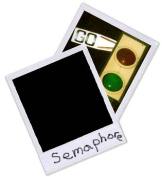
    The Little Book of Semaphores” by Allen B. Downey has been highly recommended on Squeak-Dev. This is a terrific source for understanding semaphores and learning how to apply them. The book includes puzzles and examples. Visit the Unisex Bathroom or help the Baboons crossing a canyon.

  • Recess!! Learning at play.

    Etoys

    Bill Kerr tells us about a really cool new project from Mark Shuttleworth’s Foundation called Kusasa.

    Check out Bills comments about learning from Play, and please be sure to follow the links on his post, they are very interesting.

  • Capturing Debug

    Debug

    Giles Bowkett sparked a bit of controversy. There have been some interesting responses from James and Avi. I figured I would just stay out of it, and I did a pretty good job resisting. Until now.

    Giles is right. Tools do not make good programmers. Coding in a debugger has the tendency to create lava code. Some of the worst code I’ve ever seen was the result of one more patch on a mountain of crap. The code just grows and grows until what ever was originally intended is completely lost and nothing is understandable.

    That said, if you try to take away my Smalltalk debugger I will break your arm. Why? Because tools do not make good programmers. Even the Smalltalk debugger which is way more then your ordinary debugger will not help you. It will not cause you to write better code but it won’t hurt either. Anyone that has used and understands the Smalltalk debugger knows that it is a very powerful tool to realize your design.

    If your design sucks then Giles is right a debugger is not going to help and will probably make things worse. If on the other hand you are a good programmer a debugger as capable as the Smalltalk debugger is extremely liberating.

    I can understand why some people do not appreciate the power of the Smalltalk debugger. Most people think of debuggers as a way to watch a value or set a break point. They do not understand that Smalltalk is different and miss the point. As a live system that doesn’t need to be recompiled, a system that is running while you program, the Smalltalk debugger gives the developer unprecedented access to the heart of the language.

    We have access to everything that is Smalltalk in that debugger. We can change running programs and step right into the code we just typed. We can view the whole running stack and full context. We can change data in objects, create new objects, do anything that can be done in Smalltalk right from the debugger!

    Ever wanted to step through a loop? You need to see how the system handles the 57th item. You could add code to break at that point. You could write tests that isolate that data and run it separately. You could use aspects to keep from having to change the code but you are really working hard to do something pretty simple. The worst possible solution is hitting step until you get there! Since everything is live and dynamic in Smalltalk I just change the index to 56 and step from there! See it’s pretty simple in Smalltalk!

    Yes tests are good and there is no substitution for good design. That doesn’t change with a powerful debugger. Powerful tools can enable bad programmers to program badly, but that doesn’t counter the argument that good programmers benefit from complete access to a dynamic running system.

    Ok so break your arm is a bit strong, but I hope you understand that the debugger is our window into the heart of Smalltalk, maybe we should name it something else because it does way more then capturing debug.

    – Ron Teitelbaum * President / Principal Software Engineer * US Medical Record Specialists

  • New Seaside Tutorial By Hasso-Plattner-Institute

    Hasso-Plattner-Institute Seaside Tutorial

    Michael Perscheid announced that the Hasso-Plattner-Institute has just finished a new Seaside Tutorial. Thanks for your hard work! Great Job!

    From Michael:

    Dear list,

    We proudly present a new Seaside tutorial (for Squeak 3.10 and Seaside 2.8).
    This tutorial was produced by the Software Architecture Group at the Hasso-Plattner-Institute (University of Potsdam). In ten chapters we describe step by step the development of a ToDo-application and thereby demonstrate the main parts of the sophisticated web framework Seaside.

    Since this is the first version we hope that you can help to improve the quality by providing feedback.

    Have a look at: http://www.swa.hpi.uni-potsdam.de/seaside/tutorial

    Regards
    Michael Perscheid