Category: Squeak

  • OLPC on TV

    OLPC Size

    From: Michael Haupt,

    The German/Swiss/Austrian TV station 3sat has a weekly 30-minute show called “neues” (roughly translated “new things”) which deals with IT-related information. Yesterday’s show was focusing on bringing IT to isolated regions and emerging nations as well as developing countries. The show featured an article on mesh networks in Ecuador and the Linux4Africa project.

    Linux4Africa is a German project collecting old but functional hardware. The components are cleaned, repaired (if necessary), bestowed with an Edubuntu Linux installation, and sent to Tanzania and Moçambique.

    12 of the show’s 30 minutes were dedicated to an extensive coverage of the OLPC project. Etoys and Squeak were mentioned several times during the feature. The project itself was introduced, and Bert Freudenberg was interviewed about the technical features of the XO laptop, which was presented in detail.

    There were also two interviews in the studio. Two members of GTZ (Deutsche Gesellschaft für Technische Zusammenarbeit; German Society for Technical Cooperation) responsible for XO distribution in Ethiopia talked about the project in general and about the impressive progress children made when working with the XO.

    The other interview – which filled the first slot in the OLPC coverage – featured two students from Hasso Plattner Institute, Potsdam, who have developed strategic and skill-improving games for the XO in the Software Architecture Group‘s course on software architectures.

    All in all, the editorial staff at 3sat did a tremendous job in preparing this show. To the writer’s knowledge, this was the first time the OLPC project was presented at such a level of detail in German television. Germany being a country where the the project has no actual lobby, it is important to have such media coverage – it would be nice to see much, much more of it.

    The entire show can be watched online (in German).

  • Thinking Objects

    I Object

    When I was much younger then I am now, before I knew much about computers, except that I didn’t like them, I was given a copy of Symphony. The original owner didn’t really have much use for the spread sheet / database programming language. It was the first program that I’d ever seen.

    At the time I owned a business and was doing data processing by hand. The program was a miracle. I started by writing a full reporting engine. It calculated the size of the header and footer, the size of the begin and end groups and then it figured out how much data and padding would fit in between so I could print pages. Ok I know, this was overkill for a spread sheet, but at the time I had no idea other languages existed.

    I moved from reporting into invoicing. I had to bill my customers for number of different workers unions. Most of the basic rules were the same, but each union had their own payment rules. What I needed was to specialize pieces of the program but leave most of the code alone. I programmed my spread sheet to reference a cell that said what union it was, then read the union from the data and off I went programming my specialized components.

    Once I had a major bug in the program I just couldn’t figure out. So I printed my spread sheet code. I taped them all together, cleared room and spread the whole thing out on my office floor. I found the code after hours of walking on my spread sheet from place to place until it clicked.

    Later as I discovered other languages, I had another problem. I was building an application that was very dynamic. We had a group of nurses that were building a risk assessment program for pregnant women. I wanted to build a program that would allow the users to define not only what the program did but how it flowed. They entered the specs in data and the system read that data to produce the code. I was using a database program that really didn’t support what I needed to do. What I wanted to do was create a system that could flow down from higher components to more specialized components. A change in the base component would effect everything below it.

    I was talking with one of my programmers and he said, “I know how you can do that”. He knew of a pre-compiler. We could identify and replace code with symbols. Then when we were generating the code we just ran the code through the pre-compiler to replace the pieces we needed. It was wonderful!

    I was hired for a Smalltalk Job by my old boss after an ugly merger. I had never seen smalltalk before. The language was VisualWorks and all I had was a book that had the checkbook example. In 2 days I had learned smalltalk and was writing production code. Within a week I was designing and delivering huge modules.

    I know this is not normal for learning Smalltalk. My reaction to Smalltalk was like someone removing handcuffs. I could accomplish anything. I thought wow I can do that without having to jump through all these hoops first! I don’t need a pre-compiler to do inheritance. I can program a concept and use it somewhere else. I really don’t need a reference cell and an if-statement to control flow I can just subclass and specialize my objects instead. The best part was I didn’t need a bigger and bigger floor because browsers could bring the components to me! It was a terrific experience.

    Now I look at everything through the eyes of Smalltalk. It’s really hard not too. When I learned Java the first thing I did was write the collection methods I knew so well and depended on. “What you can’t do that, your kidding!”, I thought and so I wrote it.

    There is nothing that Smalltalk can do that other languages can not copy. You can accomplish everything that Smalltalk does in a SPREAD SHEET! (believe it or not) But Smalltalk does it in a natural way. The concepts you need are built right into the language and into Objects!! As the world changes, computing changes, what we can accomplish electronically changes, it is becoming more and more clear, that the concepts of Smalltalk were right all along. If you want to understand other languages, and be extremly productive in todays computing environment, consider studying Smalltalk. Everything you need to know is right there.

    Anyone that believes that Smalltalk is dead or dying really doesn’t understand Smalltalk. You can see its influence everywhere. The requirements for todays systems, dynamic computing, distributed processing, are all in there. Smalltalk clears away all the clutter so that you can build tomorrows systems today. Actually you could have built tomorrows system yesterday!!

    I’m sorry to hear about Dolphin, but Smalltalk and Squeak are alive and well. If anyone says anything to the contrary, I object!

    Ron Teitelbaum * President / Principal Software Engineer * US Medical Record Specialists * www.USMedRec.com

  • Coder clears head… has fun…

    The Weekly Squeak often highlights news of Squeak professionals. Today I’d like to focus on a programmer new to Squeak who said some darn nice things about it. As with most of us, Squeak seemed fascinating yet unreachable when we first approached the system that contained itself. Heck, unlike most languages and environments, you have the whole world in the palm of your mouse-hand. That alone seems rather daunting.

    Tom Pierce recently blogged he’s having a blast:

    “I decided I needed to dedicate some time to it and not blow it off as I had so many times before. Boy, am I glad I did. It’s been 3 weeks or so now, and I’m growing extremely fond of Squeak. I have worked through some of the tutorials on Morphic programming. I’ve also played around with some of the Morphic direct programming using Viewers and scripts. I’ve been studying code and extended FileList2 to allow tagging files and storing the results with SPrevayler. I’ve been having lots of fun.

    “That brings me to what is continuing to pull me into Squeakland. I’m having fun. Squeak is just fun to use and hack around in. It makes me feel creative because not only can I code up things easily, but, thanks to Morphic, I can decorate my projects and workspaces with pictures, text, drawings, etc. In fact, I could use those same elements in my Morphic applications. It just makes me feel like anything is possible and that I’m some mad, creative inventor in my little virtual lab.

    Thank you Squeak team.

    I couldn’t have said it any better, Tom.

    You may have had similar experiences when you first delved into the world of Squeak. If you’d like to spin pleasurable, or not so pleasurable, memories, please do so in the comments below.

  • Yabba Dabble Do!

    Dynamic Languages 2

    Smallthought Systems, the authors of the Seaside-based online spreadsheet app Dabble dB, have a brand new application for the Facebook crowd: Dabble Do (no relation to Fred Flintstone, but “Yabba Dabble Do!” could be their tagline!)

    ToDo Lists are aplenty, but this one has a couple of neat features. Instead of a calendar popping up, the user can simply write: “tomorrow” or “next Wednesday” (although I did find a bug when entering “next wednesday”. The icon displayed “this week” instead of “next week”.) Another interesting feature is assigning events for your friends. You simply type your friend’s name, assign a task to him and press “Do it!”. I don’t know how this will pan out, but it will be interesting to track how friends bang on each other. It could prove to be a fun way for friends to communicate with one another.

    If you’re a Facebook user, it’s worth checking out!

    More about Dabble Do:

  • Dynamic Language Symposium

    Dynamic Languages 2

    Call For Papers!

    Are you ready to OOPSLA!!

    The Dynamic Language Symposium is looking for participants.

    D L S 2 0 0 7

    Dynamic Languages Symposium

    October 22, 2007
    Palais des congres de Montreal
    Montreal, Canada

    co-located with OOPSLA 2007
    sponsored by ACM SIGPLAN

    http://www.swa.hpi.uni-potsdam.de/dls07/

    The Dynamic Languages Symposium (DLS) is a forum for discussion of dynamic languages, their implementation and application. While mature dynamic languages including Smalltalk, Lisp, Scheme, Self, and Prolog continue to grow and inspire new converts, a new generation of dynamic scripting languages such as Python, Ruby, PHP, and JavaScript are successful in a wide range of applications. DLS provides a place for researchers and practitioners to come together and share their knowledge, experience, and ideas for future research and development.

    This year 30 papers were submitted to the Dynamic Languages Symposium of which 9 papers were accepted. The program committee reviewed each paper and met electronically to select papers for the final program.

    We are pleased host invited talks by Mark Miller and Jim Hugunin.

    The program of the Dynamic Languages Symposium is available from http://www.swa.hpi.uni-potsdam.de/dls07/

    Please note that participation in DLS requires registration with OOPSLA at http://www.regmaster.com/conf/oopsla2007.html or http://www.oopsla.org/oopsla2007/

    Contact:
    Pascal Costanza (pascal.costanza @ vub.ac.be)

    Robert Hirschfeld (hirschfeld @ hpi.uni-potsdam.de)

  • OLPC – The $100 Laptop – Goes into Production

    https://i0.wp.com/newsimg.bbc.co.uk/media/images/44015000/jpg/_44015059_galadima_416.jpg

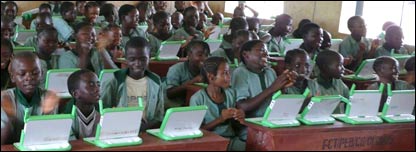
    Five years after the concept was first proposed, the so-called $100 laptop is poised to go into mass production. Check out the BBC Article.

  • More eye-candy coming soon to your Squeak desktop

    Squeak desktop eye-candy

    Gary Chambers recently announced the imminent release of an add-on package for Morphic that brings more eye-candy to your Squeak desktop.

    This package offers TrueType font support (via the FreeType Plus package), desktop theming and a whole collection of standard widgets.

    While waiting with impatience for the release of the package, you can look at the screenshots here and here.

  • Squeak Tale

    Squeak Tale

    A history of Squeak that is still being written, the following is a Squeak Tale by Göran Krampe.

    Let me tell you a story…

    I was around… when King Dan ruled the Land of the Mice, his court the “SqC” was strong and the stream was flowing smoothly. It was a glorious and joyous time and I were there to see sir PWS, sir Comanche and princess Swiki being born as children of Socket. The wizard Morphic was still young and agile at that time…

    Things were well, but not everyone were happy in the Land of the Mice – the population grew quickly and only the fortunate ones to enter the castle Image could have their fields fully prosper and not wither and die in the harsh outbacks of the Internet. (more…)

  • Supporting Seaside, OR Mapping vs. OODBMS

    Seaside

    Cincom recently reiterated their support for Seaside. Not long ago Gemstone announced something similar. What will these two commercial companies lend to Seaside?

    It is certainly true that Seaside will benefit from additional resources. Resources devoted to documentation, compatibility, and testing will help the community. Working on new solutions for persistence is a great idea, and having different options to solve your persistence requirements can only help developers. (more…)

  • Squeak at the Salón de la Educación 2007

    Antonio Moreno just let us know of this Youtube video featuring a demonstration of Squeak use in education. The demo, taken at the Salón de la Educación 2007, shows Randall Caton explaining to teachers, students and politicians how he uses Squeak with his students as part of the Nasa Connect program.