Year: 2009

  • ESUG 2009 kicks off, VAST goes free, Technology Awards break records

    ESUG 2009 UBO

    ESUG 2009 has got off to a successful start, with a packed programme of events lined up for the next few days.

    After an introduction from Stefan Ducasse for ESUG and local organisers Alain Plantec and Loic Lagadec, Georg Heeg looked at Smalltalk’s history and future direction and James Foster ran through news from the Gemstone world, including brief discussions of Metacello and Scaffolding.

    After lunch there were a series of shorter presentations including the “academic strand” of the International Workshop on Smalltalk Technologies.

    In the evening, Instantiations sponsored the reception event in the evening, and took the opportunity to announce free editions of Visual Age Smalltalk for academic and open source usage, which was very well received!

    Attendees also had the opportunity to see the entries for the ESUG 2009 Innovation Technology Awards. A record-breaking 21 applications were entered this year, and the results of the voting will be announced at the conference social event on Thursday.

    (Photo from Adrian van Os’ site)

  • Magma goes HA!

    MagmaNode

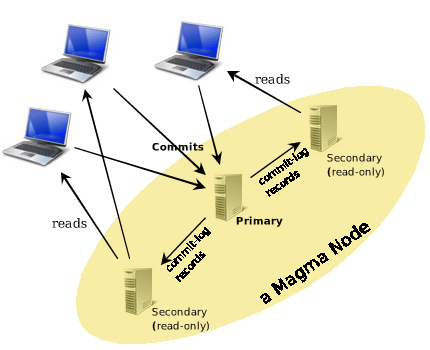
    Chris Muller announced release 42 of Magma to the Squeak-dev mailing list. Magma is a multi-user object database for Squeak and Pharo images and which provides transparent access to a large-scale shared persistent object model. Magma release 42 brings unprecedented scale and availability of persistent domain models to Squeak users.  In particular, a single logical repository can now be served from multiple servers simultaneously, each hosting their own physical copy which are kept constantly up to date automatically.

    There’s lots more information, introductory material and documentation at the Magma homepage.

  • Squeakfest a roaring success

    logoFest

    The US Squeakfest finished last week, following on from the previous Brazilian event, and it was a great success. Perhaps the best way to give a flavour of the excitement of the events and the enthusiasm of the attendees is to quote Timothy Falconer’s report:

    As I write this, I’m flying home from Squeakfest USA.  Sitting here, staring at my laptop, I’m completely unable to find appropriate words to describe the magic and friendship of the last few weeks.  So many passionate talks, so many stirring examples, so many last minute details and surprises.

    I’m tired.  That much is clear.  Blame it on three conferences in four weeks and roughly fifteen thousand miles of travel in between.  Were it not for my many Squeaker traveling companions, I’d have curled up to hibernate long ago.  Truly the best part of the last month has been the company I’ve kept: Rita, Yoshiki, Marta, Kim, Scott, Alex, Bert, Ted, Bill, Randy, both Kathleens, Avigail, and Milan. Sharing the adventure with people of such talent and humor has truly been an embarrassment of riches.

    As for the presentations, workshops, and hallway talks, there’s just too much to say.  With dozens of sessions between the two Squeakfests, my mind’s a blur with memories of enthusiasm and insight, along with strengthened motivation to support and expand our vibrant Etoys community.

    Rather than summarize my recollections, I’ll instead point you to the video on the Squeakland website http://squeakland.org/resources/audioVisual/#cat865 (scroll down to Squeakfest Brasil and Squeakfest USA).

    We managed to capture nearly all of Squeakfest USA on our live webcast feed, though we lost the first half of the presentation from South Korea.  Also, the final roundtable wasn’t posted at the request of one of the participants. My apologies for the audio problems on the first morning.  If you start at the beginning, know that the sound does get better.  Also, if the video screen is at times too hard to read, the blame rests with the web stream, which reduced quality to improve bandwidth.  We will be posting better video from both events in the future, particularly of the children’s workshop, so stay tuned.

    I’d like to give a special thanks to Rita Freudenberg, our education director, who earned the “most traveled” award for her trips from Germany to both Brazil and Los Angeles.  When you total her air distance, she flew more than 40,000 kilometers (25,000 miles), which means she effectively circled the globe for Squeakland in the last month.  Her insight, passion, and hard work in the last eight months were instrumental in both Squeakfests.  As with her husband Bert, her continuing efforts on behalf of the Etoys community are unparalleled.  Also a big thanks to Marta, Bruno, Kim, and Kathryn for tending to the many details of both conferences.  Your hard work really showed.   Most of all, I’d like to thank everyone at Viewpoints Research Institute for their time and talent in the last year.  Your guidance has greatly helped Squeakland Foundation as we take and carry the Etoys torch into the future.
    Wow! What more is there to say? Let’s hope that ESUG 2009 proves to be as inspiring!

  • Iliad web framework released

    iliad

    Nicolas Petton recently announced on the squeak-dev mailing list the first public release of Iliad, which is succintly described on the Iliad website as a “a flexible, lightweight but powerful Smalltalk web framework.” Originally developed on GNU Smalltalk, but ported to Squeak/Pharo, Iliad features:

    • standalone stateful widgets
    • nice urls with a simple routing system
    • simple API
    • easy to setup and deploy (no complicated configuration step)
    • javascript layer to update widgets using AJAX. If javascript is not enabled, the behaviour remains the same by making normal requests
    • support for the Magritte meta-description framework, for simple generation of views on data

    Iliad combines elements of the other leading Smalltalk web frameworks Seaside, Aida/Web and HttpView2. You can find out more about the installation and use of Iliad by reading the documentation on the Iliad site, and on the GNU Smalltalk site.

  • Pier 1.2 now out

    Pier logo

    Lukas Renggli, Tudor Girba and colleagues have been working hard on their Pier web content management system for the past few months, and have now shared the product of their labours with the release of Pier 1.2. Pier is a lightweight web content management system, built on Seaside, and intended to be managed from the browser.

    They announced some of the key features of the 1.2 release as:

    • An improved system for including dynamic content in pages (see http://www.piercms.com/doc/syntax for more details)
    • No need to have the _s and _k Seaside parameters in the url (it uses cookies to record state by default)
    • Pier can remember last login information
    • Smaller javascript code for faster page loading
    • Better default CSS (including a style for events)
    • Halos for enhanced editing
    • Available as a one-click install (based on Pharo 0.1-10374)

    The one-click image is available for download at the Pier web site, where Tudor has also produced a brief video to get you started with Pier. There are plenty more resources including more videos on the documentation section of the site.

  • SOB lays an egg – what will emerge?

    phoenix

    Those of you who read the squeak-dev mailing list will know that the list is currently going through the annual frenzy of discussion about the nature and direction of Squeak, including much to-and-fro over such topics as: the original vision of the founders of Squeak; the tangled relationship between Etoys and the rest of the Squeak environment and community; the reasons behind the Pharo project and how much its goals really differ from those of Squeak; whether children should be locked in the nursery or allowed to roam freely into every room of the house; and much more. If you have time (and some light body armour), it’s well worth reading through the hundreds of emails that have been written which explore and interpret much of the history and philosophy of Squeak.

    This discussion has motivated the Squeak Oversight Board to look at one topic that caused much debate: how to manage the development of Squeak. Driven by a concern that there are many hurdles that discourage wide-spread participation in the contribution process, the Board have put forward a new community development model that they hope will “enable the community at large to improve Squeak, the core of the system and its supporting libraries”.

    Based on processes that have been shown to work in commercial settings, the Board’s model includes the use of Monticello as the primary source code management system, free access for the developers to the main repositories (trunk, tests, and inbox) and an incremental update process for both developers and users of Squeak.

    Obviously, such a change has sparked off its own debate, and important questions are being hammered out on the squeak dev mailing list. If you care about the health of the Squeak environment, its future direction, and the future support for your own favourite applications, this is a key moment for you to understand and contribute to the discussion which is continuing on the squeak-dev mailing list (see archives), on irc, and on the Board’s blog.

  • ESUG Innovation Technology Awards – Time is running out!

    esug-logo

    The Innovation Technology Awards session is one of the real highlights of the annual International Smalltalk Conference organised by ESUG each year.

    Noury Bouraqadi has just posted to remind everyone that you only have until 1st July to nominate your work for an award. Put together a brief description of your work, which can be in any Smalltalk dialect, make it available for inspection online, and be prepared to demonstrate it to a constant stream of inquisitive Smalltalkers during the conference, and you could win up to €500 in addition to the recognition and respect of your peers.

    Have a look at Noury’s site for an introduction to the ideas that have proved popular in the past, or our own details of last year’s winners.

    All the administrative details can be found on the ESUG 2009 website – so get those application forms in now!

    And in case you’ve forgotten, this year’s conference is in Brest, France from 31 August—4 September, 2009. It will be preceded by Camp Smalltalk running on the weekend of 29—30 August 2009, and incorporates the International Workshop on Smalltalk Technologies on 31 August.

  • Back to the Future: Programming in Smalltalk

    back-to-the-future

    More exciting conference news for Smalltalk aficionados: James Foster has announced on his blog that this year’s OOPSLA conference will include several tutorials with a Smalltalk theme including his “Back to the Future: Programming in Smalltalk” in which he will look at the “new” ideas from Smalltalk that are still influencing newer programming languages. He will examine some of these ideas and present a number of tutorial exercises that explore some of Smalltalk’s  fundamentally different approach to language design and object orientation, including the following aspects:

    • All values are objects, even integers, booleans, and characters (no boxing/unboxing);
    • Classes and methods are objects (supporting reflection);
    • The language has only five reserved words;
    • All control flow (looping and conditional branching) is done through message sends;
    • Programming is done by sending messages to existing objects; and
    • The base class library can be modified.

    James works on Gemstone’s high performance product family based on Smalltalk, but intends the exercises to be relevant across different versions.

    This year’s OOPSLA will be held in Orlando, Florida from 25 to 29 October, and will also be co-located with the Dynamic Languages Symposium, which will doubtless have lots to interest Smalltalkers.

    On the other hand, if you’re looking for a European break this year, don’t forget that the 2009 International Smalltalk Conference, organised by ESUG, will be held in Brest, France, from 31 August to 4 September, and also has a great set of sessions lined up.

  • Squeak Apps help push App Store over 50,000

    appsavailable

    Phil Schiller led the keynote presentation today at Apple’s Worldwide Developers’ Conference. One of the many causes for celebration he had was the phenomonal success of the iPhone App Store, which now has 50,000 applications available for download.

    Although he was careful to be even-handed in giving credit to all iPhone developers for helping Apple achieve this success, he must have secretly been thanking John McIntosh, who is turning into a one-man app wave. Without John’s recent batch of new Squeak-based applications, Phil would have been left announcing the much less satisfactory figure of 49,99749,994 applications.

    In case you missed it, John’s latest announcement was that his Fraction app is now available for calculations involving unlimited sized fractions and factorials, as it attempts to preserve numerical accuracy to an unprecedented degree. The new app joins the two apps based on his WikiServer that John already has on the App Store.

    We look forward to seeing if the notoriously byzantine App Store approval process will be able to keep up with John’s flood of new applications.

  • The Revenge of Smalltalk

    Despite recent discussions over what killed Smalltalk, there continues to be lots of interest in the language and in Seaside in particular. Anyone based near London will be able to find out more about both topics at a talk dramatically titled “Seaside: The Revenge of Smalltalk“.

    This “Geek Night” is going to cover how Smalltalk makes web development different and how Seaside is being put to use in the “Real World”. Participants will learn about real object-orientated programming rather than class-orientated programming.

    The two presenters are Lukas Renggli, who will be talking about Squeak and the world of Open Source Smalltalk; and Michel Bany from Cincom who will be discussing how Seaside and Smalltalk has been used in companies like JP Morgan.

    The talk is hosted by Thoughtworks‘ London office on Monday 6th July, 2009 from 7:00pm—10:00pm.