



Philippe Marschall announced the Seaside – One Click Experience!
There has been a lot of talk recently about improving the Smalltalk, Squeak and Seaside experience for new users. Especially to make it easier and faster to get started. The two vendors that support Seaside are working in this area. That does not mean Squeak can not lead the way. Today we present you the Seaside One-Click Experience [1] for OS X, Windows and Linux based on the work done by the Sophie Project [2].
Just download the zip-archive, extract it and double click on the executable for your platform and you have Seaside 2.8 final running.
Cheers
The Squeak Seaside Team
[1] http://www.seaside.st/download/squeak#167943699
[2] http://www.sophieproject.org/

And they are off! Mass production of the One Laptop Per Child XO computer has started. The last of the major problems in production appear to have been chased out of the assembly line. Some minor problems with tooling that was causing some small blemishes on the bumpers have been tweaked. Everything is ready to roll.
The last major technical issues have been addressed with new tests developed to run on the production line itself. This high level of testing is necessary because of the harsh environments that this laptop will be used.
OLPC is an extremely low power very durable computer which is being developed to improve access to learning materials for the worlds children. This education project continues to amaze the world with the level of commitment to provide opportunities for all. Reaching Mass Production is no small task. Congratulations to all!

Bill Kerr is learning by playing. He is building Space invaders in EToys. This should be fun to watch! Great icons!!

After a beta phase of two months we release the final version of Seaside 2.8. Most bugs fixed during this period were either long standing (already in 2.7), minor or portability related, Together with the dozens of Seaside 2.8 applications already in production today this gives a pretty good feeling about this version. A special mention goes to Roger Whitney, thanks to him we went from 99 commented classes to 144.
This release brings major performance and memory improvements:
We have a list of new features [1] and a migration guide [2] on our homepage.
Squeak users can get it either from SqueakMap, Universes or directly via Monticello (Seaside2.8a1-lr.518). A special note for Squeak users, do not load Seaside 2.8 into an image that has already Seaside 2.7 in it. If you use Squeak 3.7 you will have to load SeasideSqueak37 as well.
VisualWorks users can get it form Store (2.8a1-lr.518,tkogan).
GemStone/S users can load Seaside2.8g1-dkh.522.
[1] http://www.seaside.st/community/development/seaside28
[2] http://www.seaside.st/documentation/migration
Cheers
The Seaside Team
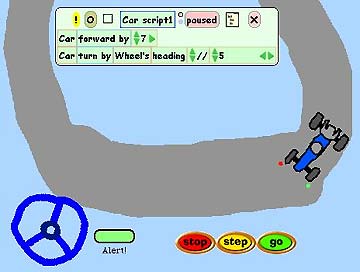
Bill Kerr tells us about a really cool new project from Mark Shuttleworth’s Foundation called Kusasa.
Check out Bills comments about learning from Play, and please be sure to follow the links on his post, they are very interesting.

Giles Bowkett sparked a bit of controversy. There have been some interesting responses from James and Avi. I figured I would just stay out of it, and I did a pretty good job resisting. Until now.
Giles is right. Tools do not make good programmers. Coding in a debugger has the tendency to create lava code. Some of the worst code I’ve ever seen was the result of one more patch on a mountain of crap. The code just grows and grows until what ever was originally intended is completely lost and nothing is understandable.
That said, if you try to take away my Smalltalk debugger I will break your arm. Why? Because tools do not make good programmers. Even the Smalltalk debugger which is way more then your ordinary debugger will not help you. It will not cause you to write better code but it won’t hurt either. Anyone that has used and understands the Smalltalk debugger knows that it is a very powerful tool to realize your design.
If your design sucks then Giles is right a debugger is not going to help and will probably make things worse. If on the other hand you are a good programmer a debugger as capable as the Smalltalk debugger is extremely liberating.
I can understand why some people do not appreciate the power of the Smalltalk debugger. Most people think of debuggers as a way to watch a value or set a break point. They do not understand that Smalltalk is different and miss the point. As a live system that doesn’t need to be recompiled, a system that is running while you program, the Smalltalk debugger gives the developer unprecedented access to the heart of the language.
We have access to everything that is Smalltalk in that debugger. We can change running programs and step right into the code we just typed. We can view the whole running stack and full context. We can change data in objects, create new objects, do anything that can be done in Smalltalk right from the debugger!
Ever wanted to step through a loop? You need to see how the system handles the 57th item. You could add code to break at that point. You could write tests that isolate that data and run it separately. You could use aspects to keep from having to change the code but you are really working hard to do something pretty simple. The worst possible solution is hitting step until you get there! Since everything is live and dynamic in Smalltalk I just change the index to 56 and step from there! See it’s pretty simple in Smalltalk!
Yes tests are good and there is no substitution for good design. That doesn’t change with a powerful debugger. Powerful tools can enable bad programmers to program badly, but that doesn’t counter the argument that good programmers benefit from complete access to a dynamic running system.
Ok so break your arm is a bit strong, but I hope you understand that the debugger is our window into the heart of Smalltalk, maybe we should name it something else because it does way more then capturing debug.
– Ron Teitelbaum * President / Principal Software Engineer * US Medical Record Specialists

Michael Perscheid announced that the Hasso-Plattner-Institute has just finished a new Seaside Tutorial. Thanks for your hard work! Great Job!
From Michael:
Dear list,
We proudly present a new Seaside tutorial (for Squeak 3.10 and Seaside 2.8).
This tutorial was produced by the Software Architecture Group at the Hasso-Plattner-Institute (University of Potsdam). In ten chapters we describe step by step the development of a ToDo-application and thereby demonstrate the main parts of the sophisticated web framework Seaside.
Since this is the first version we hope that you can help to improve the quality by providing feedback.
Have a look at: http://www.swa.hpi.uni-potsdam.de/seaside/tutorial
Regards
Michael Perscheid
Georg Heeg, the Executive Director of The Smalltalk Industry Council, announced on the mailing list that STIC has a new website and is organising next year’s Smalltalk Solutions conference for 18-21 June in Reno, Nevada. For more details, check out Georg’s blog.
Hernan Wilkinson and Andres Valloud announced the first Smalltalk conference in Argentina, to be held in Buenos Aires on 10 December this year. See the conference website for more details (in Spanish, but with a summary of events in English).
If you can’t make it to Buenos Aires that week, how about Paris? Serge Stinckwich announced the 6th SmalltalkParty on 11 December. There’s more information (in French) on Serge’s blog.
Göran Krampe is organising a Squeak BOF (birds of a feather) session at this year’s OOPSLA conference, being held on 21-25 October in Montréal. More details of the programme at the OOPSLA conference website. The BOF session will be on Monday evening at 19:00.

Dan Ingalls working at Sun Labs has just released their first version of Morphic implemented completely with JavaScript which they are calling the Lively Kernel. There is no plugin required, but your browser currently must support SVG. You should use your Safari browser for best results. It will work with Firefox but you should expect bugs. It does not work with Internet Explorer yet.
Point your supported browser here to see this exciting work! Great Job to the team at Sun, Dan Ingalls, Tommi Mikkonen, Krzysztof Palacz, and Antero Taivalsaari.
 The Weekly Squeak