Category: Tools

  • “An Introduction to Seaside” now published

    Michael Perscheid announced in the Seaside mailing list the publication of a new Seaside book An Introduction to Seaside. He says that:

    “This book explains the major concepts of Seaside in a clear and intuitive style. A working example of a ToDo List application is developed to illustrate the framework’s important concepts that build upon each other in an orderly progression. Besides the notions of users, tasks, components, forms and deployment, additional topics such as persistence, Ajax and Magritte are also discussed.”

    The book is based on the online tutorial developed at the Hasso-Plattner Institut, and the content has been revised and expanded for this edition.

    The 212-page book can be previewed and ordered at online publisher lulu.com for about €20/£14/$25.

    Congratulations to all involved at the HPI Software Architecture Group for producing this great introduction to Seaside. They are: David Tibbe, Michael Perscheid, Martin Beck, Stefan Berger, Jeff Eastman, Michael Haupt, Robert Hirschfeld and Peter Osburg.

  • The Year of Smalltalk

    The Year of Smalltalk

    Randal L. Schwartz just announced that he will be giving a 3 hour tour of Seaside at OSCON 2008. We are very proud to have Randal on the Squeak Foundation Board. We are looking forward to more of his “Year of Smalltalk“.

    [Edit: corrected spelling]

  • Seaside startup snapped up

    Auctomatic

    The news is spreading that Auctomatic, a Vancouver-based startup using Seaside, has been bought by Live Current Media for $5 million. The company, which produces a tool to ease selling and inventory management for eBay sellers, was funded by a number of investors including Paul Graham’s technology investment company Y Combinator, and its staff including founders Kulveer Taggar, Harjeet Taggar and Patrick Collison will join the new owners. Lots more details are available from Phillip Kast’s blog.
    It looks like Vancouver is becoming a very exciting place to be for Seaside developers!

    [Edit: Corrected the information about Y Combinator]

  • The Golight: Tool Support for Test-Driven Development

    SqueakSVNAt the Hasso-Plattner-Institut (HPI) in Potsdam, all Bachelor students have to participate in a software development project in their final year. Said projects are usually issued by industry collaborators, and hence are “real” development tasks that often yield actual products. The different HPI research groups coach the student project groups.

    This year’s Bachelor project of the Software Architecture Group was issued by CollabNet, the company that spawned Subversion. The students are working on SqueakSVN to make SVN version control and tooling available in Squeak.

    Coaching in the Software Architecture Group includes training in agile methodologies, with a strong emphasis on Extreme Programming. Of course, this includes heavy testing.

    The students were facing the question of how to make the current project status perceivable in a motivating way. Ideally, the status should be immediately visible when entering the project room in the morning, without the need to start up a Squeak image and run all the tests first.

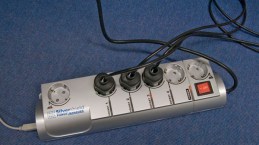
    ampel2They came up with a really nice idea: the “test stoplight”, or, rather, “golight” to make it sound more positive. It’s as simple as this. A wooden board, three red, yellow, and green light bulbs, sockets, power supply lines, and an USB-controlled multiway connector make up the hardware part of the golight.

    Realizing the software part was also easy. One computer plays the role of a dedicated test server, running a Squeak image. In this image, a process checks out the most recent version of the software from the repository every five minutes, runs all the tests, and switches on the light corresponding to the color of the TestRunner bar. At night, it switches the lights off entirely.

    leiste.jpgThe software does not even have to know anything about the protocol used to drive the multiway connector. The connector comes with a set of command-line tools that can be run from Squeak using OSProcess. These are currently limited to the Windows operating system, but since controlling the connector is basically about writing some data to a serial connection, it should not be too hard to come up with solutions for other platforms.

    This morning, when I first saw the golight, it was showing green.

    Feel free to contact us for detailed building instructions and information related to the software!

  • Immersive Education Summit Ad-Hoc Meeting

    Immersive Education Summit

    Well I couldn’t resist. Aaron E. Walsh sent out an invitation to the SqueakCroquet communities for an ad-hoc Immersive Education Meeting. The Boston Digital Summit held in January covered the Education Grid, this meeting was a chance to review this information for those that were not able to make it to the summit.

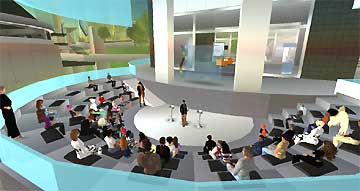
    Second Life was quite an experience. I had to sign up and go through some training, figure out how to get to Sun’s virtual auditorium and sit down. It was quite amusing to see some people show up on stage and not know how to sit down either, so I didn’t feel so bad. Maybe I should have spent more time in the training.

    Aaron, reviewed the details of the Education Grid. The Grid is an education content virtual repository focused on interoperability, standards, and quality educational content. The goal is to provide standards that allow content to be developed to operate in different virtual worlds. These standards must be open source to ensure that content can be made freely available.

    Content is just a piece of the puzzle in education. Educators also need tools to be able to evaluate the progress of students. There are a number of general tools that should be developed and made available in a consistent way for each offering. Aaron mentioned, “While it is possible to record everything that happens in a virtual world there is no way an educator could watch everything a student did in an activity that might take 2 hours.” Tools that allow educators to evaluate raw data, to assess progress and to track grades, and to create content are essential.

    Quality content will be assured by having a Peer Review of offerings before the become part of the grid. The peers will be selected from the community and people with special expertise will be sought to make sure that the education goals are met, the content is accurate, standards are followed, and licensing is compatible to be a part of the grid.

    Licensing and interoperability were the major concerns once Aaron opened the floor to questions. Ownership of the content was also discussed. Aaron mentioned that a not-for-profit organization would own the grid, but that the grid would be virtual and would be hosted by multiple organizations. I’m not sure there was a full answer about the ownership of the content. I would have suggested that copyright stay with the author or developing organization, and that the grid would receive unlimited rights to distribute the content, much in the same way were are trying to organize the Squeak community.

    Well I ran out of time but Aaron did a very nice job of wrapping it up just a few minutes over. Thank you! The concept is really a terrific idea. I hope that our communities will join together and support developing freely available virtual world educational materials. Aaron mentioned that other meetings will be held in Croquet, I look forward to that. I hope to see you there. Hopefully that meeting will be just as well attended as the SL meeting.

  • Self-Sustaining Systems *Call for Papers*

    s3
    Workshop on Self-sustaining Systems (S3) 2008
    May 15-16, 2008
    Potsdam, Germany
    http://www.swa.hpi.uni-potsdam.de/s3/

    Call for papers:

    The Workshop on Self-sustaining Systems (S3) is a forum for discussion of topics relating to computer systems and languages that are able to bootstrap, implement, modify, and maintain themselves. One property of these systems is that their implementation is based on small but powerful abstractions; examples include (amongst others) Squeak/Smalltalk, COLA, Klein/Self, PyPy/Python, Rubinius/Ruby, and Lisp. Such systems are the engines of their own replacement, giving researchers and developers great power to experiment with, and explore future directions from within, their own small language kernels.

    S3 will be take place May 15-16, 2008 at the Hasso-Plattner-Institute in Potsdam, Germany. It is an exciting opportunity for researchers and practitioners interested in self-sustaining systems to meet and share their knowledge, experience, and ideas for future research and development.

    — Invited talk:

    Ian Piumarta: Late-bound Object Lambda Architectures (Viewpoints Research Institute, USA)

    — Submissions and proceedings:

    S3 invites submissions of high-quality papers reporting original research, or describing innovative contributions to, or experience with, self-sustaining systems, their implementation, and their application. Papers that depart significantly from established ideas and practices are particularly welcome.

    Submissions must not have been published previously and must not be under review for any another refereed event or publication. The program committee will evaluate each contributed paper based on its relevance, significance, clarity, and originality. Revised papers will be published as post-proceedings in the Springer LNCS series.

    Papers should be submitted electronically via EasyChair at
    http://www.easychair.org/conferences/?conf=s3 in PDF format.
    Submissions must be written in English (the official language of the
    workshop) and must not exceed 20 pages. They should use the LNCS format, templates for which are available at http://www.springer.de/comp/lncs/authors.html.

    — Venue:

    Hasso-Plattner-Institut (Potsdam, Germany)

    — Important dates:

    Submission of papers: February 15, 2008
    Author notification: April 11, 2008
    Revised papers due: April 25, 2008

    S3 workshop: May 15-16, 2008

    Final papers for LNCS post-proceedings due: June 6, 2008

    — Chairs:

    * Robert Hirschfeld (Hasso-Plattner-Institut Potsdam, Germany)
    * Kim Rose (Viewpoints Research Institute, USA)

    — Program committee:

    * Johan Brichau, Universite Catholique de Louvain, Belgium
    * Pascal Costanza, Vrije Universiteit Brussel, Belgium
    * Wolfgang De Meuter, Vrije Universiteit Brussel, Belgium
    * Stephane Ducasse, INRIA Lille, France
    * Michael Haupt, Hasso-Plattner-Institut, Germany
    * Robert Hirschfeld, Hasso-Plattner-Institut, Germany
    * Dan Ingalls, Sun Microsystems Laboratories, USA
    * Martin von Lšwis, Hasso-Plattner-Institut, Germany
    * Hidehiko Masuhara, University of Tokyo, Japan
    * Ian Piumarta, Viewpoints Research Institute, USA
    * David Ungar, IBM, USA

    — Registration fees:

    Early (until April 18, 2008)
    * Regular participants: EUR 160
    * Students: EUR 80

    Late (after April 18, 2008)
    * Regular participants: EUR 170
    * Students: EUR 90

  • Virtual Education a Reality for Aaron E. Walsh

    Aaron Walsh

    The Federation of American Scientists and the Kauffman Foundation are backing the Boston College’s own Aaron E. Walsh efforts to build virtual reality education content for virtual worlds like Croquet, Second Life and Project Wonderland.

    Walsh has been focusing on delivering content to children with disabilities through the Grid Institute an organization that promotes the use of a public utility grid to develop and deliver high-end virtual reality and 3-D simulation programs.

    This new multi-million dollar project called Immersive Education promises to bring together an international group of educators, researchers and companies along with foundations to develop standards and technologies that will enable a much richer interactive 3-D educational experience.

    The award winning Immersive Education software, now on it’s third generation was originally only available for university students. The project was started in 2004 at Boston College. The software is now available as an open standard for educational software. Visit immersiveeducation.org for more information.

  • Interview with Avi Bryant on FLOSS Weekly

    FLOSS Weekly interview with Avi Bryant

    In this episode of this podcast on free, libré and open source software, hosts Randal Schwartz and Leo Laporte talk to Avi Bryant about Seaside, the “heretical” web application framework for Squeak and Smalltalk, initially developed by Avi, and used by him to develop the DabbleDB site.

  • Seaside – One Click Experience!

    Seaside - One Click Experience!

    Philippe Marschall announced the Seaside – One Click Experience!

    There has been a lot of talk recently about improving the Smalltalk, Squeak and Seaside experience for new users. Especially to make it easier and faster to get started. The two vendors that support Seaside are working in this area. That does not mean Squeak can not lead the way. Today we present you the Seaside One-Click Experience [1] for OS X, Windows and Linux based on the work done by the Sophie Project [2].

    Just download the zip-archive, extract it and double click on the executable for your platform and you have Seaside 2.8 final running.

    Cheers
    The Squeak Seaside Team

    [1] http://www.seaside.st/download/squeak#167943699
    [2] http://www.sophieproject.org/

  • Nepal’s Open Learning Exchange Announces First Learning Activity (It’s Squeak!)

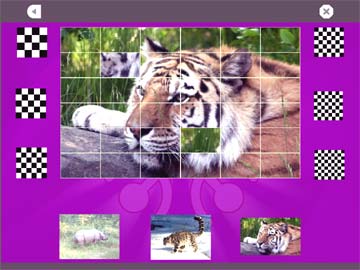
    Nepal's Open Learning Exchange Announces First Learning Activity (It's Squeak!) - picture 1

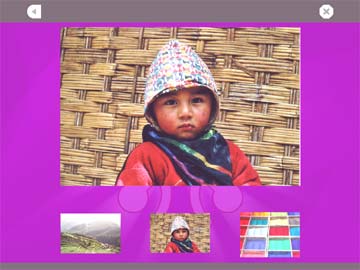
    The world watches as the adults fight over power. Who will run the country of Napal, what will the political solutions bring to the people, what will it mean to the children? I know I’m not the first to recognize the incredible beauty of the country, just look at these beautiful pictures in Nepal’s Open Learning Exchange first learning activity, developed in Squeak to be used in OLPC. We can only hope that the people that win power, during this difficult time, will concentrate on the children, on education, and on happiness and enlightenment for all.

    Nepal's Open Learning Exchange Announces First Learning Activity (It's Squeak!) - picture 2

    The Program itself is beautifully done. I found myself learning how to say the numbers. This Tiger was really fun, and kinda difficult to reconstruct.

    This is a very good example of what technology can give to children, and how the local community can participate to help educate their youngest members.

    Read it from the creators:

    “The word in Devanagari script at the top is “E-Paati.” OLE Nepal’s General Secretary created this term. “Karipaati” means blackboard and we use “E-Paati” to refer to any kind of computer, such as a desktop, laptop, or PDA. OLE Nepal’s unofficial slogan right now is “From Karipaati to E-Paati.” We think this slogan expresses that using laptops in schools in simply the next logical step in education. We prefer the E-Paati over “laptop” or “computer” because both are seen as luxuries in Nepal. Karipaatis are not seen as luxuries but essential to education. We hope to convince the Nepali public that in this day in age E-paatis are essential to a quality education. “

    This level of understanding of local conditions can only come from the local people themselves. Developing an education platform and making the tools available throughout the world far surpasses the value of a cheap laptop. This is only one of what will be thousands of projects that will change the planet. The $100 Laptop came first but everything else comes now. The software will easily surpass the value of the computer! As Nicholas Negroponte is fond of saying, “This is an education project, not a laptop project.” We couldn’t agree more, and we are proud that Squeak and EToys are a part of this terrific project. Today is a good day to celebrate E-Paati!