Author: Michael Davies

  • Return To Smalltalk

    NY-Skyline

    The NYC Smalltalk group manages an active programme of talks and presentations, and this month’s talk looks to be very interesting. Daniel Antion, Vice President of Information Services at American Nuclear Insurers, discusses why his company began planning to migrate away from Smalltalk, and the evolving circumstances that caused them to take the difficult decision to reverse this strategy.

    Dan has been working in Smalltalk since 1994 and develops most of ANI’s transaction processing systems. Dan has presented at Smalltalk Solutions, OOPSLA and the AIIM Expo on topics related to systems development, content management and SharePoint.

    Dan’s experience and position within ANI mean that he can offer some real insights into the perceptions of the strengths and weaknesses of Smalltalk from a corporate perspective, and the ongoing challenges it faces. He says “I’m not sure we saved Smalltalk forever but we bought it some serious time. The technical details that work for Smalltalk include its stability, malleability and extensibility. We still have concerns but we think they can be mitigated.”

    If you’re going to be in New York on 18th November, find out more about Dan’s talk on the NYC Smalltalk website.

    (Image by meironke on flickr)

  • Etoys 4 released

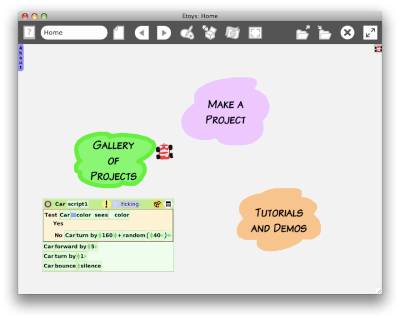
    Following his announcement of the release candidate last month, Timothy Falconer of Squeakland has now announced the full release of Etoys 4, which you can now download from their website.

    The Squeakland Fall newsletter has the Etoys 4 release notes which detail the changes you’ll find, in English and Spanish. The newsletter also has some thoughts by Scott Wallace on this release which completes the hand-over of Squeak Etoys from Viewpoints Research to the newly formed Squeakland Foundation.

    To publicise some of the work being done using Etoys, the Squeakland site has a new feature: the Squeakland Showcase. Everyone can now share their projects directly from Etoys to the website, where the Etoys community can then benefit from the many surprising and useful Etoys examples that are available.

    Timothy invites anyone using Squeak or Etoys, to consider adding their name to their Squeakers list. More than 175 people from 35 countries have signed, which really shows the enthusiasm and reach of Etoys throughout the world.

    Timothy adds “Special thanks to the Squeakland software team, particularly Bert Freudenberg, Yoshiki Ohshima, and Scott Wallace for their tremendous efforts in the last month. Your hard work really shows!”

  • Smalltalk Party in Paris

    Noury Bouraqadi wrote to the squeak-dev mailing list with news that French Smalltalk users are holding their eighth annual SmalltalkParty in Paris on Saturday 28th November 2009.

    The empahsis is on short presentations, so there promises to be plenty of interesting presentations. Items already planned for discussion include:

    • Speed dating with Smalltalk—Smalltalk in 15 min
    • Pharo: a Smalltalk vision
    • Profiler in Smalltalk
    • Mondrian  visualisations
    • Seaside by example
    • Small Parser—an executable grammar-based parser
    • Helvetia: A framework for DSLs
    • Coral: a Smalltalk scripting Langage
    • F-Script 2.0 news

    The session will be held at Ecole des Mines de Paris, Boulevard Saint Michel – Paris and runs from 09:00 to 17:00.

    For more information (in French) see the SmalltalkParty webpage.

  • SqueakDBX news

    logo-opendbx

    The SqueakDBX team have been very busy recently working on their OpenDBX plugin which allows Squeak users to perform relational database operations (including DDL and DML as well as SQL) through an open source library.

    Their new release, Version 1.1, now supports MySQL, PostgreSQL, Sqlite3, Oracle and MSSQL on Windows, Linux and Mac, as well as incorporating a number of performance refactorings.

    They’ve also found time to build a new website for SqueakDBX, which contains lots of documentation and links to useful resources.

    To get a better idea of the features of SqueakDBX, and of the work that the team have been doing, have a look at their ESUG 2009 presentation. You can also follow their work at http://lists.squeakfoundation.org/mailman/listinfo/squeakdbx

  • Squeak Etoys release candidate

    Etoys

    Timothy Falconer wrote to the squeak-dev mailing list to announce the Squeak Etoys 4 release candidate, in preparation for final release on 21st October.

    This release is the product of nine months of work by the Etoys software team, and several weeks of sprinting by Bert Freudenberg, Yoshiki Ohshima, Scott Wallace and Timothy.

    The Etoys team are now looking for your input: Timothy says “Please help us test the new Etoys! We want to make sure that it’s rock solid before getting used in schools and homes throughout the world”.

    You can download the Etoys 4 release candidate at http://squeakland.org/download under “Release Candidates”.

    Highlights of Etoys 4 include:

    • loading and sharing projects directly to the central Squeakland Showcase
    • fully “license clean”, so that it can be included in Linux distros
    • improved toolbar and viewer
    • optional drop-down categories for the project info box
    • lots of fixes and new translations throughout

    To learn more about what’s new in Etoys 4, you can watch an interview with Scott Wallace or an introduction to the new beta showcase.

    If you find any problems in the release candidate, you can try the Etoys chat channel, or post in the forums, or if you’re able to reproduce the error, add a ticket to the issue tracker.

    Timothy passes on special thanks to everyone who made suggestions or helped the team to test the betas, saying “We’d be nowhere without our community!”

  • Smalltalks 2009

    smalltalks

    Following on from their high-profile presence at ESUG this year, the Argentinian Smalltalk community are preparing to host their third annual domestic Smalltalk conference, Smalltalks 2009.

    Running from 19th to 21st November in Buenos Aires, the conference’s goal is to “gather both the Argentine and International Smalltalk community to get connected sharing our work and experience with regards to Smalltalk or related topics”.

    The conference will have two streams: “Research and Education” for research and education work done with Smalltalk in universities and public or private
    entities; and “Industry and Development” for presentations related to Smalltalk software developed by companies or individuals, both public and private.

    In addition, the event will host a Smalltalk programming contest.  As in previous years, well known personalities from the international community will attend the conference.

    All those connected with Smalltalk, be it faculty, students, researchers, developers or entrepreneurs, are invited to participate, free of charge, as presenters and members of the audience.

    In addition, early registrants get a great-looking T-shirt for free, so get your bookings in now!

  • New Development Model, two months on.

    It has been two months since the Squeak Oversight Board first put forward their “New Community Development Model”. At the time the proposal caused a lot of heated debate on the squeak-dev mailing list, with concerns being expressed that similar efforts in the past had had little lasting impact, and had caused great frustration for those pushing those earlier efforts.

    The motives of the Board were to “get rid of as many hurdles as possible in the contribution process [and]  to enable the community at large to improve Squeak, the core of the system and its supporting libraries”.

    So, two months down the line, how’s it doing?

    If sheer volume is any criterion, it looks like a great success with over 500 packages uploaded as patches to 3.10.2 and over 40,000 downloads from the trunk (see bottom of the linked page for up to date statistics).

    The results of all this activity are available to use and test in the daily updated image published at http://ftp.squeak.org/trunk/ (needs a recent VM). If you want to contribute, you can add new patches at http://source.squeak.org/inbox/, or ask one of the current developers for access to the developers repository at http://source.squeak.org/trunk.

    If you just want to get an idea of what’s going on, check out the commit logs that are getting posted to the squeak-dev mailing list, and to the #squeak irc channel on freenode.

  • ESUG 2009 wrap up – Best Ever?

    DSC_5243-1

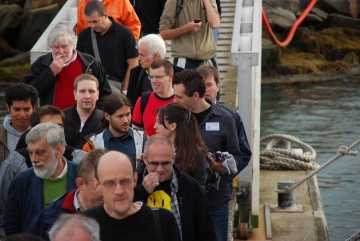
    All the participants should now have safely returned home after a hugely successful ESUG conference. Participants from around the world (including an Argentinian football team) shrugged off the economic climate to spend a week in Brest and share their experiences and aspirations with fellow Smalltalkers.

    Highlights included:

    Check out the photos for a flavour of the conference: Adriaan, Hernan, James, Yuri. and many more.

    Comments on the web have been very positive too:

    • “ESUG was a blast, totally.”
    • “Definitely the best Smalltalk conference I’ve ever been to.”
    • “a great conference”
    • “a pleasure to attend every year”
    • fascinating, inspiring and enjoyable”
    • it’s been intense”

    With reviews like that, next year’s conference in Barcelona is bound to be a sell-out, so remember to book early!

    (Photo from Yuri’s collection)

  • ESUG 2009 kicks off, VAST goes free, Technology Awards break records

    ESUG 2009 UBO

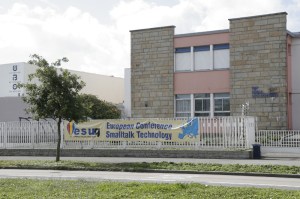
    ESUG 2009 has got off to a successful start, with a packed programme of events lined up for the next few days.

    After an introduction from Stefan Ducasse for ESUG and local organisers Alain Plantec and Loic Lagadec, Georg Heeg looked at Smalltalk’s history and future direction and James Foster ran through news from the Gemstone world, including brief discussions of Metacello and Scaffolding.

    After lunch there were a series of shorter presentations including the “academic strand” of the International Workshop on Smalltalk Technologies.

    In the evening, Instantiations sponsored the reception event in the evening, and took the opportunity to announce free editions of Visual Age Smalltalk for academic and open source usage, which was very well received!

    Attendees also had the opportunity to see the entries for the ESUG 2009 Innovation Technology Awards. A record-breaking 21 applications were entered this year, and the results of the voting will be announced at the conference social event on Thursday.

    (Photo from Adrian van Os’ site)

  • Magma goes HA!

    MagmaNode

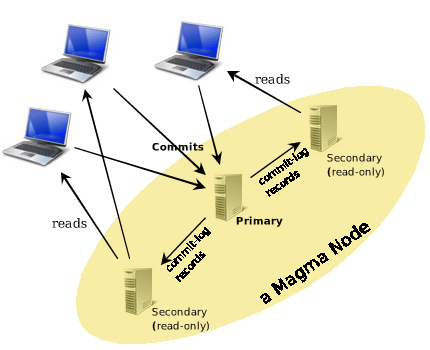
    Chris Muller announced release 42 of Magma to the Squeak-dev mailing list. Magma is a multi-user object database for Squeak and Pharo images and which provides transparent access to a large-scale shared persistent object model. Magma release 42 brings unprecedented scale and availability of persistent domain models to Squeak users.  In particular, a single logical repository can now be served from multiple servers simultaneously, each hosting their own physical copy which are kept constantly up to date automatically.

    There’s lots more information, introductory material and documentation at the Magma homepage.